Winning Back What Was Lost: How Texas Employers Are Turning Remote Work Into a Recruitment Revolution

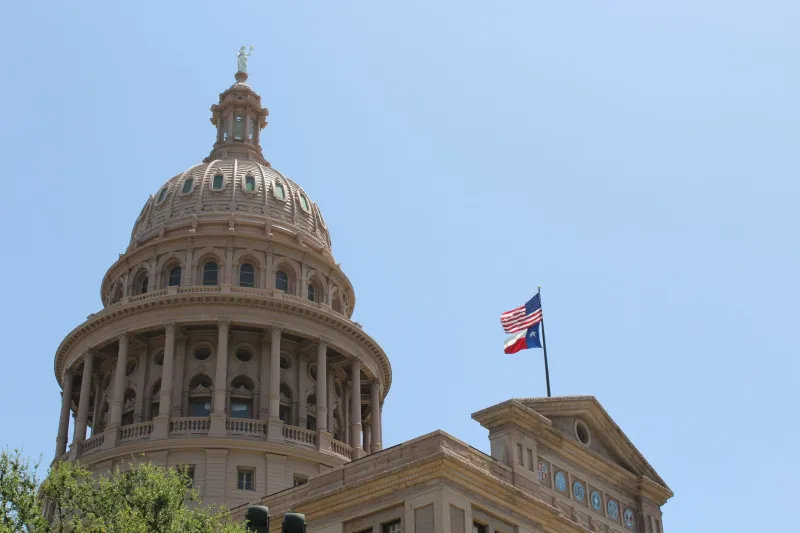
Photo: Kelvin photo, CC BY-SA 3.0, via Wikimedia Commons
For years, Texas watched a quiet exodus unfold. Engineers in Austin accepted offers from San Francisco firms. Marketing executives in Dallas fielded calls from New York agencies. Developers in Houston packed their bags for Seattle. The common thread was rarely dissatisfaction with Texas itself — it was the assumption that serious career advancement required proximity to coastal headquarters.
That assumption is now collapsing. And Texas employers, armed with data, flexibility, and renewed ambition, are moving swiftly to reclaim the talent they once surrendered.
The Shift That Changed Everything
The widespread adoption of distributed workforce models following the pandemic fundamentally altered the geography of professional opportunity. When a software engineer in Plano can contribute to a product team in San Francisco without ever boarding a plane, the calculus of relocation changes entirely. Coastal employers discovered they could access talent anywhere. Texas employers, however, are beginning to understand the inverse is equally true: they can now compete for professionals who never needed to leave in the first place — or who left and have since reconsidered.
Several Texas-based technology and financial services companies have quietly launched what internal HR teams are calling "homecoming initiatives" — structured outreach campaigns targeting former employees who relocated to coastal markets. These programs combine competitive base salaries, equity participation, and the explicit promise of career advancement without a ZIP code requirement. Early results are encouraging. One mid-sized Austin fintech firm reported that nearly a third of its targeted outreach to former employees yielded serious conversations, with several resulting in formal re-hires within the past eighteen months.
The appeal is straightforward. A professional earning a coastal salary while living in Texas — where there is no state income tax, where housing remains comparatively affordable, and where quality of life is anchored by community and culture — is effectively receiving a significant financial upgrade. The numbers speak for themselves, and talented professionals are doing the math.
What Texas Companies Are Getting Right
The employers succeeding in this reclamation effort share several characteristics. First, they have invested seriously in remote work infrastructure — not as a temporary accommodation, but as a permanent operational commitment. Reliable collaboration tools, asynchronous communication norms, and deliberate investment in team cohesion across distributed environments signal to prospective hires that flexibility is a feature, not a concession.
Second, these companies are competing on total compensation rather than base salary alone. Equity packages, performance bonuses, and robust benefits — including healthcare plans that rival what coastal employers offer — are becoming standard components of offers extended to returning professionals. Texas employers who once assumed proximity to home would offset compensation gaps are learning that top-tier talent expects both.
Third, and perhaps most significantly, successful companies are leading with honesty about career trajectory. One of the persistent concerns among professionals who left Texas was whether staying or returning would mean accepting a ceiling on advancement. The firms winning this competition are directly addressing that concern, presenting concrete evidence of internal promotion, leadership development programs, and access to high-visibility projects.
The Policy Environment That Can Accelerate This Trend
Market forces alone will not complete this work. Policy choices at the state level have a meaningful role to play in making Texas the definitive destination for remote professionals — whether they are returning home or choosing the Lone Star State for the first time.
Jeffrey's vision for Texas economic policy recognizes that the state's competitive advantages must be actively defended and extended. That begins with preserving the tax environment that makes Texas uniquely attractive. The absence of a state income tax is not simply a talking point — it is a structural incentive that compounds over the course of a career. Any movement toward income-based taxation, however incremental, would erode the very foundation upon which this remote work recruitment strategy rests.
Beyond tax policy, broadband infrastructure investment in Texas's suburban and rural communities remains an urgent priority. Remote work is only viable where connectivity is reliable. Too many Texas communities — particularly outside the major metropolitan corridors — still lack the high-speed internet access necessary to support a professional workforce operating in distributed environments. Closing that gap is not merely an economic development issue; it is a prerequisite for allowing Texas families to live where they choose rather than where connectivity forces them.
Regulatory clarity for remote work arrangements — including clear guidance on employer obligations, workers' compensation coverage, and interstate tax treatment — would also reduce friction for companies seeking to hire across state lines. Texas should be leading the national conversation on sensible remote work policy frameworks, not waiting for Washington to impose one-size-fits-all mandates that ignore the realities of how modern businesses operate.
A Conservative Case for Competing Aggressively
Some may question whether government has any role in shaping this dynamic. The conservative answer is unambiguous: government's role is to remove barriers, protect competitive advantages, and ensure that private enterprise has the conditions it needs to succeed. It is not to manage outcomes, but it is absolutely to prevent bad policy from foreclosing good ones.
Texas did not become the nation's premier destination for corporate relocation by accident. It happened because generations of policymakers made deliberate decisions to keep taxes low, regulation sensible, and opportunity accessible. Extending that same discipline to the emerging remote work economy is not a departure from conservative principles — it is their direct application.
Jeffrey understands that the professionals Texas lost to coastal markets were not lost because Texas failed them. They left because the structural incentives pointed elsewhere. Those incentives have shifted. The mission now is to ensure that Texas policy reinforces what the market is already beginning to demonstrate: that a career of consequence, a life of meaning, and a future of prosperity are all available right here at home.
The Opportunity in Front of Us
Texas companies are not waiting for permission to compete. They are already reaching back across the country, making calls, extending offers, and welcoming back professionals who are ready to come home. The infrastructure, the culture, and the financial logic are all converging in Texas's favor.
What remains is the work of policy — the steady, principled effort to ensure that the state's structural advantages are preserved, expanded, and made available to every corner of Texas, not just its urban cores. That is the commitment Jeffrey brings to this campaign: not promises of government intervention, but a clear-eyed dedication to keeping Texas the kind of place where ambition and roots can coexist.
The brain drain that defined a previous era is giving way to something more promising. Texas employers are ready to compete. The talent is ready to return. The question is whether our policy environment will rise to meet the moment — and under Jeffrey's leadership, the answer will be yes.