Hardworking by Nature, Thriving by Policy: The Real Story Behind Texas's Workforce Dominance

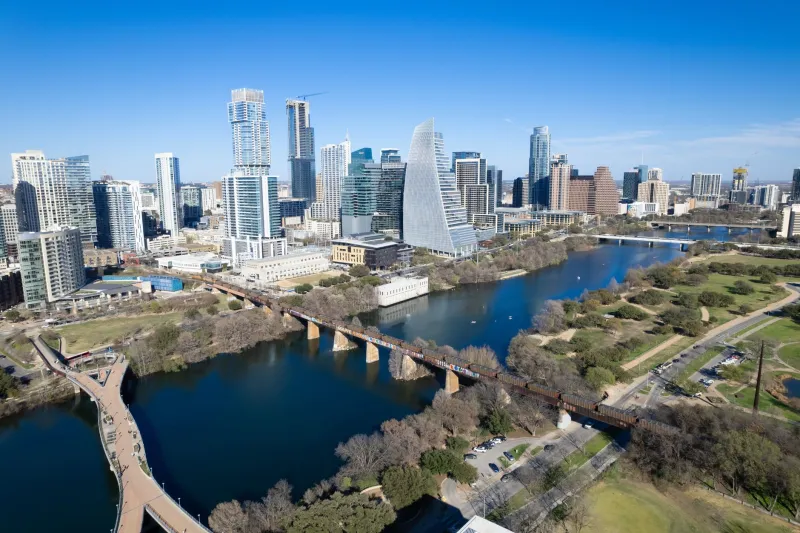
Photo by Photo by Raul Miranda on Unsplash on Unsplash
There is a reason companies relocate their headquarters to Texas rather than away from it. There is a reason entrepreneurs launch ventures here rather than in states that promise more bureaucratic "support." And there is a reason the Texas unemployment rate has consistently trended below the national average even during periods of significant national economic turbulence. The answer is not luck. It is a deliberate combination of cultural character, sound governance, and an economic environment that respects the dignity of work.
Understanding what makes Texas's workforce exceptional—and understanding what threatens it—is not merely an academic exercise. It is the foundation of Jeffrey's economic vision for this state.
The Numbers Tell a Compelling Story
Texas added more than 600,000 net new jobs in a recent twelve-month period, outpacing every other state in the nation in absolute job growth. The state's labor force participation rate regularly surpasses the national average, reflecting not only available employment but a workforce culture that values earning over dependency. According to the U.S. Bureau of Labor Statistics, Texas has accounted for a disproportionate share of national job creation for more than a decade running.
Small business formation tells an equally striking story. The Lone Star State ranks among the top states in the country for new business applications per capita. In sectors ranging from energy and manufacturing to technology and logistics, Texans are not waiting for opportunity to arrive—they are building it themselves. The Texas Comptroller's office has noted that the state's gross domestic product now ranks among the largest of any political entity in the world, comparable to entire nations.
These are not statistics to be taken for granted. They are the product of deliberate choices.
What Drives Texas Productivity
The cultural dimension of Texas's workforce advantage is often underestimated in policy discussions. Texans carry a genuine belief in the value of self-reliance, earned success, and personal accountability. That ethos is not merely a marketing slogan—it shapes hiring decisions, work habits, and entrepreneurial risk tolerance in ways that no government program can replicate.
Consider the experience of a small manufacturing firm in the Permian Basin that expanded its payroll by forty percent over three years. The owner credits not a government incentive package but rather the availability of workers who arrive on time, take pride in their craft, and do not require layers of regulatory compliance to be managed. "My employees are Texans," he noted plainly. "They show up to work."
That spirit is reinforced, rather than created, by the policy environment. Texas imposes no state income tax, which means workers keep more of every dollar they earn. Regulatory frameworks governing business licensing, environmental compliance, and labor relations are structured to enable commerce rather than obstruct it. Workers and employers alike benefit from a legal climate that resolves disputes efficiently and does not punish success with punitive taxation.
The Threats Are Real and Immediate
Texas's workforce advantages did not emerge in a vacuum, and they will not survive neglect. Several converging pressures now threaten to erode what generations of Texans have built.
Federal regulatory expansion poses the most immediate structural threat. When Washington imposes sweeping new mandates on energy production, manufacturing processes, or employment classification, Texas businesses bear compliance costs that diminish their competitive edge. A regulation drafted by a federal agency in Washington, D.C., without regard for Texas's specific economic conditions, can price a small employer out of the market just as effectively as a direct tax increase.
Competing states have also grown aggressive in their efforts to recruit Texas-based talent and businesses. States such as Florida, Tennessee, and Georgia have studied the Texas model and are actively replicating elements of it—lower taxes, streamlined permitting, and pro-business governance. The competition is healthy in principle, but it demands that Texas continue leading rather than resting on its reputation.
Perhaps most concerning is a quieter threat: the gradual importation of policy frameworks that have failed elsewhere. Proposals to impose state-level income taxes, expand public sector union influence, or layer additional regulatory burdens onto Texas employers do not emerge from economic analysis. They emerge from ideological commitments that have demonstrably reduced workforce vitality in states like California, Illinois, and New York—states that Texas workers and businesses have been fleeing for years.
Jeffrey's Vision for Sustaining the Advantage
Jeffrey's approach to workforce and economic policy begins with a straightforward premise: the role of government is to protect and preserve the conditions that allow Texans to thrive, not to manage that thriving on their behalf.
On the federal front, Jeffrey is committed to actively opposing regulatory mandates that impose disproportionate costs on Texas businesses without corresponding economic benefit. That means engaging forcefully in the regulatory comment process, supporting litigation where federal agencies have exceeded their statutory authority, and working with the Texas legislature to assert the state's rights wherever federal overreach undermines our competitive position.
On workforce development, Jeffrey supports expanding vocational and technical training pipelines that connect young Texans with high-demand, high-wage careers in trades, energy, and advanced manufacturing. The four-year university pathway is valuable, but it is not the only pathway to a productive career—and Texas's workforce needs ensure that skilled tradespeople are every bit as vital as credentialed professionals. Aligning community college and technical school curricula with the actual demands of Texas employers is not a radical idea; it is a common-sense investment in the state's human capital.
Jeffrey also recognizes that retaining Texas talent requires more than competitive wages. Housing affordability, reliable infrastructure, and community safety all factor into whether a skilled professional chooses to build a life here or accepts a recruitment offer from another state. These concerns are addressed throughout Jeffrey's broader platform, but they are inseparable from workforce policy.
Protecting What Texans Built
The Texas workforce advantage is not a gift. It was built by workers who arrived before dawn, by entrepreneurs who risked their savings, by policymakers who resisted the temptation to solve problems by creating new bureaucracies. Every generation of Texans has had to defend that inheritance against those who would trade it for the false comfort of managed dependency.
This generation is no different. The pressures are different in their specifics but identical in their nature: forces that would rather regulate Texas's success than emulate it.
Jeffrey's candidacy is grounded in the conviction that the Lone Star State's workforce dominance is worth defending with the same resolve that built it. Not through government programs that substitute for initiative, but through policies that honor initiative, reward effort, and keep the government out of the way of the most productive workforce in America.
Texas workers have earned their advantage. Jeffrey intends to make sure they keep it.