Defending the Land That Built Texas: How Federal Overreach Threatens Our Ranchers—and What We Intend to Do About It
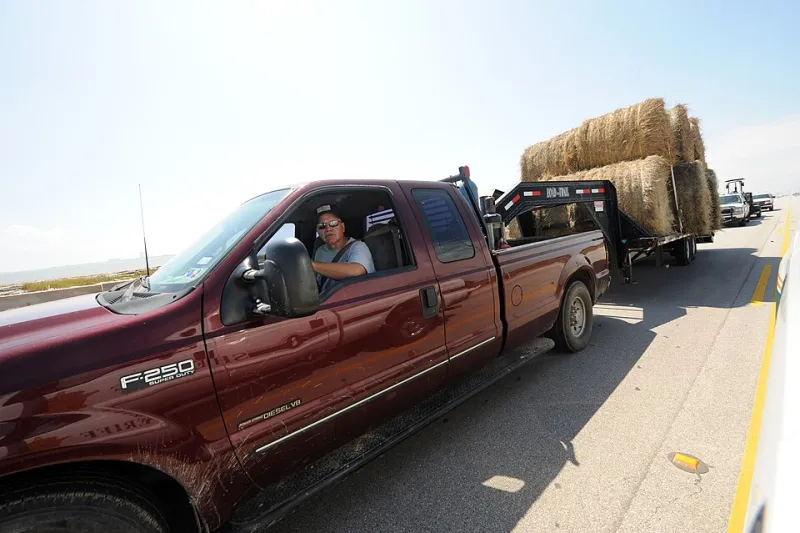
Photo: Jocelyn Augustino, Public domain, via Wikimedia Commons
Long before Texas had a skyline, it had soil. The ranchers and farmers who worked this land across generations did not merely produce food and fiber—they established the culture of self-reliance, stewardship, and stubborn independence that remains the defining character of this state. Today, that heritage is under a sustained assault. The threat does not arrive on horseback or at the point of a weapon. It arrives in the form of federal regulations, consent decrees, agency guidance documents, and compliance mandates issued from Washington by officials who have never set foot on a working Texas ranch.
This is not a hypothetical concern. It is the daily reality for thousands of Texas agricultural families, and it demands an honest accounting—and a serious response.
The Regulatory Burden Is Real and Growing
The scope of federal intrusion into Texas agriculture has expanded dramatically over the past two decades. The Environmental Protection Agency's interpretation of the Clean Water Act has at various points extended federal jurisdiction over stock ponds, seasonal drainage ditches, and even low-lying pasture areas that hold water only after heavy rainfall. The practical consequence is that a rancher who wishes to clear brush near a dry creek bed may find himself navigating a permitting process that consumes months and thousands of dollars in compliance costs—before a single shovel enters the ground.
The Waters of the United States rule, which has been revised, rescinded, and reinstituted across multiple administrations, exemplifies the instability that makes long-term agricultural planning nearly impossible. Landowners cannot make sound decisions about irrigation infrastructure, drainage improvements, or land use when the regulatory framework governing those decisions shifts with each election cycle. Certainty is not a luxury for a farming operation—it is a prerequisite for survival.
Beyond water rights, the regulatory burden extends to pesticide application protocols, livestock emission reporting requirements, endangered species habitat designations, and labor compliance mandates that bear little relationship to the operational realities of a family-run ranch. Each individual requirement may appear modest in isolation. In aggregate, they constitute a compliance architecture that consumes time, capital, and energy that should be directed toward productive agricultural work.
Stories from the Land
A multi-generation cattle operation in the Hill Country recently faced a federal inquiry related to a stock tank that had existed on the property for over sixty years. The tank, constructed by the current owner's grandfather, was flagged as a potential jurisdictional water body following a complaint filed by an outside environmental organization. The resulting correspondence with federal agencies consumed the better part of a year, required the retention of an attorney, and produced no finding of any actual environmental harm. The cost to the family, in both dollars and distraction, was substantial.
In the Panhandle, a cotton farming operation has watched the cost of environmental compliance documentation increase by a significant margin over the past decade. The farmer—a man who manages thousands of acres with a small family workforce—describes the paperwork burden as a second job that produces nothing. He notes, with considerable frustration, that the regulations are written with large corporate operations in mind and that the compliance infrastructure those corporations maintain is simply not available to a family operation.
A rancher in the Trans-Pecos region describes the impact of federal land-use restrictions tied to habitat designations for species that may or may not be present on his property. The designation effectively limits his ability to manage brush, control invasive plants, and maintain the water infrastructure his cattle depend upon. He is not opposed to environmental stewardship—he has practiced it his entire life. He is opposed to being regulated by people who do not understand the land and do not bear the consequences of their decisions.
The Principle at Stake
The conservative case against federal agricultural overreach is not merely economic, though the economic harm is real and well-documented. The deeper argument is constitutional and cultural. The federal government's authority to regulate the use of private land in Texas was never intended to extend to the granular, day-to-day operational decisions of working farms and ranches. The principle of subsidiarity—the idea that decisions should be made at the lowest competent level of governance—is not simply a conservative talking point. It reflects a genuine wisdom about accountability, knowledge, and the limits of centralized authority.
A bureaucrat in Washington cannot know the specific hydrology of a particular creek in Uvalde County. A federal agency cannot understand the precise balance of grazing pressure, rainfall variability, and soil composition that a rancher in Throckmorton County has spent a lifetime learning to manage. When federal regulation substitutes distant expertise for local knowledge, it does not improve outcomes. It degrades them—while simultaneously stripping landowners of the autonomy they have earned.
Jeffrey's Commitment to Texas Agricultural Freedom
Jeffrey's approach to agricultural policy is rooted in a clear conviction: Texas landowners are the best stewards of Texas land, and state government exists to support and protect that stewardship—not to serve as an intermediary for federal mandates that undermine it.
Aggressive Defense of Texas Water Rights. Jeffrey will prioritize the legal and legislative defense of Texas's authority over its water resources against federal jurisdictional expansions. This includes supporting the Texas Commission on Environmental Quality's capacity to assert state primacy under applicable federal statutes and challenging overreaching federal interpretations through every available legal avenue.
Reducing Compliance Costs for Small and Mid-Size Operations. Jeffrey supports the creation of a dedicated state-level agricultural regulatory ombudsman—an office charged specifically with helping family operations navigate federal compliance requirements and identifying opportunities to reduce duplicative burdens. Large agricultural corporations have legal and compliance departments. Family ranches do not, and state government should fill that gap.
Opposing Unilateral Federal Land-Use Designations. Any federal action that effectively restricts the productive use of private Texas land without compensation and without meaningful state input will face Jeffrey's direct opposition. Texas must assert its voice in the regulatory processes that affect its landowners, and where those processes fail, must pursue legislative remedies at both the state and federal levels.
Strengthening Agricultural Certainty Through Long-Term Policy Commitments. Texas should enact statutory protections that insulate agricultural operations from the regulatory whiplash produced by changing federal administrations. Stability in the regulatory environment is itself a form of economic support for the farming and ranching community.
The Heritage Worth Defending
Texas agriculture is not merely an economic sector. It is the living continuation of a tradition that shaped this state's identity before statehood itself. The men and women who work this land deserve a government that recognizes that—and that is willing to stand between them and the distant bureaucratic forces that threaten their way of life.
Jeffrey stands with Texas landowners. Not as a campaign posture, but as a matter of principle—because the ground beneath their feet is the ground that made Texas what it is.